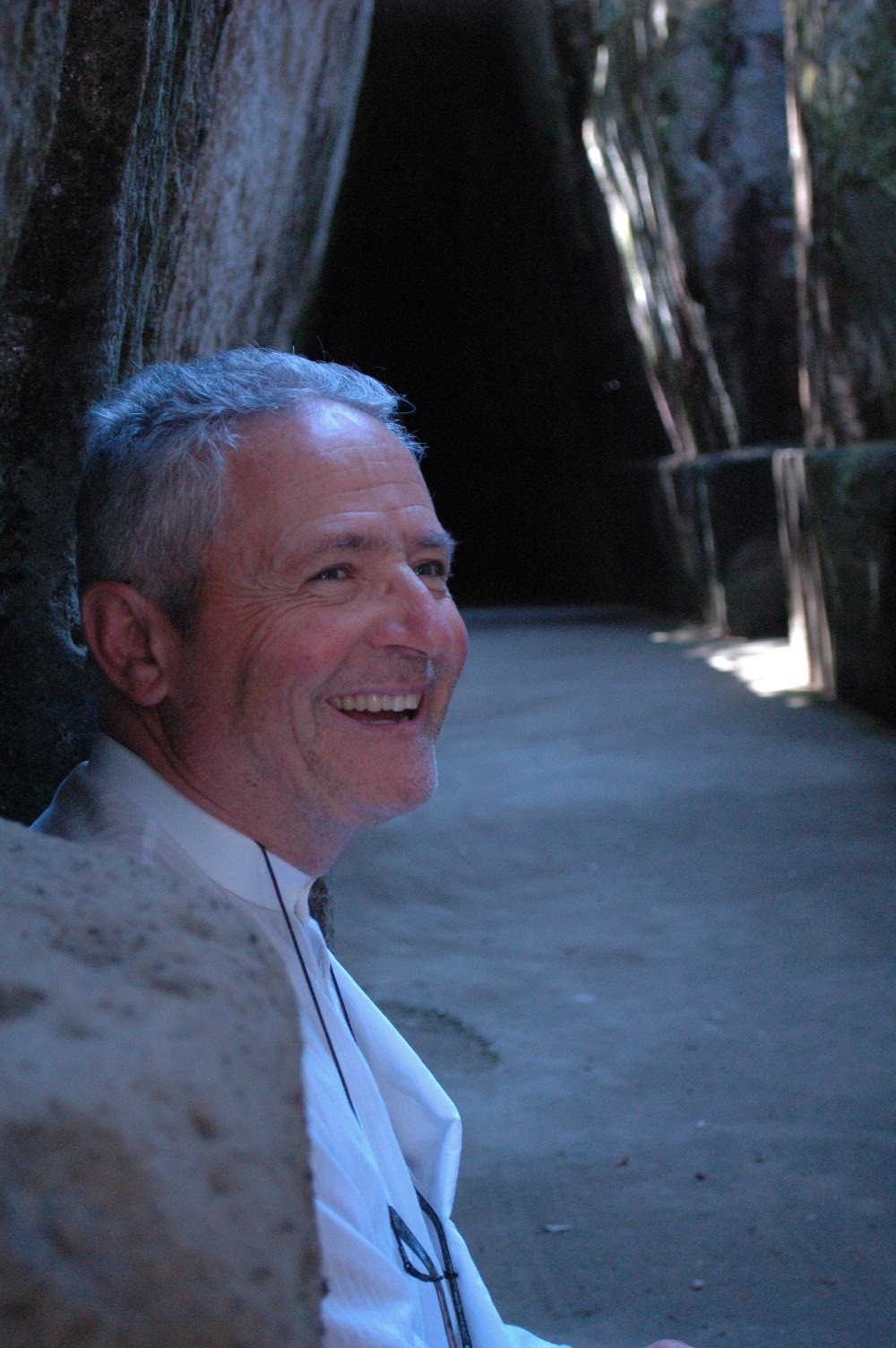
H.G. Matsyavatar Das

Wednesday, 1 December 2010

Counseling based on a Bhaktivedanta approach - Interview given by Akrura Prabhu to Shriman Matsyavatara Prabhu (Part III)

Akrura Prabhu: If you like, we can now speak of the help relationship for those people who have not made a certain spiritual choice yet.

Matsyavatara Prabhu: Yes, these are people who are researching for a solution of their existential problems. There are many who suffer in their family environment because of difficult relationships with their spouse, their parents or their children. The family system is actually in a critical situation and problems in this environment are the most frequent. However, there could be problems even on the work place, in the economical area or in the health area. I personally worked for six years starting in 2002 in some of the biggest Italian hospitals by holding seminars accredited by the Health Ministry in the field of Psychology of the Assistance to the terminally ill and to their family members, by giving them the Hindu Vedic Traditional teachings. These seminars were mostly for the medical personnel: doctors, nurses, social-assistance workers, but also for people affected by irreversible diseases and their family, their assistants, their friends, etc. In this environment we deal with a huge amount of suffering, anxiety, anguish, fears and a number of other ailments that can be alleviated and definitively resolved through the introduction of spiritual teachings of universal value and applied to the specific context. I wrote a book on this subject “Psychology of the Cycle of Life”. I wrote this book after my experience in the hospitals and it is also related to a subject of our Study Course of the Indian Traditional Sciences.

The trauma of death and mourning are very difficult to elaborate, especially when the sudden death is the one of a offspring or young parents or a young spouse. In these cases we must help the individual with many necessities: emotional, psychological, social, professional, economical, etc.. Mainly, through our Counseling Courses for the harmonization and the development of one’s personality we help people with solving even practical aspects, for example on the legal field or maybe by re-projecting their professional career by always stimulating them to gain a superior vision through ethical-spiritual teachings of universal value and extraordinary instruments such a meditative visualization.

In any case, I would like to emphasize that at the base of each helping relationship there is reciprocal respect and the valorization of personal freedom.

Akrura Prabhu: Freedom of choice?

Matsyavatara Prabhu: Yes, freedom to make decisions in relation to our own lives. We offer instruments and stimulus for reflections so that those who desire it can choose with a mind free from conditioners, cultural and religious prejudices, etc. Shri Krishna Himself in Bhagavad-Gita (XVIII.63) says to Arjuna: “Thus I have explained to you the most confidential of all knowledge. Deliberate on this fully, and then do what you wish to do..”.

In the help relationship there are four priority objectives that I try to favor: realizing one’s uniqueness, pursuing a good social integration by respecting and valorizing all cultures, living in autonomy and freedom of thought without being phagocytized by fake models and realizing one’s deepest spiritual dimension.

Realization of freedom should be expressed on two levels: my freedom as an individual and the respect for the freedom of the other members of the society and of all creatures. We cannot experience an authentic inner satisfaction if we don’t respect and favor the wellbeing of all living beings (See Bhagavad-Gita XVIII.54).

We should be ready to sacrifice some of our so called freedom to respect other’s freedom thus reaching a higher level of freedom.

Akrura Prabhu: This represents the essence of sacrifice.

Matsyavatara Prabhu: Of course. It the concept of yajna: giving up something to obtain something higher.

If a person doesn’t realize that other’s wellbeing is not different from his own, he will never achieve real success in life. Love others as you love yourself is the teaching of the Gospel and even in Bhagavad-Gita we find the same teaching expressed particularly in chapter XII from verse 13 through verse 20.

Bhakti is the most elevated expression of spiritual consciousness which is concretized in pure Love for God and can also be realized through service to humanity. This service leads us to the comprehension of existence of a superior Self, the universal Self, the Soul of humanity, Origin of life and Sustainment of every being. It is in this manner that we can gradually realize our deepest identity of spiritual nature, not in a dogmatic or stereotypical way, but through a major conscience of ourselves on a physical, psychological and emotional level. As a result of a deep inner work we can generate consciousness, vision, serenity, joy and capability to give and receive Love.

Friday, 19 November 2010

Counseling based on a Bhaktivedanta approach - Interview given by Akrura Prabhu to Shriman Matsyavatara Prabhu (Part II)

Akrura Prabhu: Therefore all this requires the development of eminently personal relationships?

Matsyavatara Prabhu: Certainly. Every person must be considered as a single world. A charming, universal conscientious unique being, different from others, with whom we can establish a unique and special relationship. No one must be stuck in a scheme or labeled as a certain psychological type. By viewing an individual in a schematic vision we can significantly diminish the help that we can give him. I would like to stress that this help is not comparable to a psycho-therapeutic cure. It draws teachings and spiritual values that can produce harmony, equilibrium and long lasting wellbeing to every component of the personality and in every sphere of existence (psychological, social, professional, etc. )

The available instruments of Krishna-Bhakti are formidable and extraordinarily powerful, but we must learn how to use them at their best by understanding how to apply them to ourselves. To do this it is important that we are encouraged to go deeply inside ourselves, try to really understand our feelings, what is against and what is favorable to our evolutionary process, and how we can better express our spirituality and devotion to the Lord. As it is explained in the Ayurvedic science, each individual has a determined psychological-physical profile: pitta, kapha or vata, at the same time in transcendent psychology, on the spiritual level, each one of us has his own rasa or spiritual sentiment that connects him to God in a peculiar way. By rediscovering that rasa, we can participate in ananda, hladhini shakti and happiness which is intrinsic in our original Love nature. And by realizing this rasa every negative tendency and behavioral defects disappear naturally. Consequently, discouragement, suffering, sadness, fears and depression will dissolve. Therefore, helping people first of all means helping them to re-settle in their human nature by stimulating them to do what is more in accordance to their nature, from which they can draw authentic satisfaction and benefits.

Devotional service means encouraging a person to center himself in his own rasa. If we do not stimulate the devotee to engage himself in his guna and karma coordinates and in the vision to realize his peculiar relationship with the Divine, he will hardly be able to live his spiritual life in a joyous and evolutionary way.

Akrura Prabhu: Therefore we must engage people in accordance to their nature.

Matsyavatara Prabhu: Yes indeed. This could be a priority even in relation to the principle of practical utility because this is the only way that we can really offer a good spiritual cure.

Akrura Prabhu: I remember reading a letter from Shrila Prabhupada in reference to this where He underlined the importance of acting this way.

Matsyavatara Prabhu: Yes, it is fundamental to comprehend inclinations and spiritual aspirations of each individual by helping him first with recognizing them. We must interact with each person in a personalized way. We could not act the same with two individuals, not even with twins! Each person is characterized by his peculiar nature and we must enter the same wavelength. This also includes the development of a peculiar modality of relationship, a modality more in accordance with our interlocutor.

Akrura Prabhu: It is a great principle, an important lesson.

How can you comprehend people’s problems and help each individual with expressing and facing his uneasiness?

Matsyavatara Prabhu: By establishing a personal relationship, sharing experiences, doing things together, educating him on how to reflect and weigh up his life and make projects for his future. This would help people with connecting even more the dreamed reality with the one lived every day by increasing their desire to overcome their limitations and to evolve by developing a greater sense of responsibility. One of the main causes for suffering is the inability to realize ones most intimate aspirations, the discrepancy between who we are and who we would like to be, between how we live and how we would like to live.

Akrura Prabhu: When and how do you generally include the importance of undertaking ones responsibilities?

Matsyavatara Prabhu: I try to make the individual responsible right away. He who doesn’t have a sense of responsibility, cannot aspire to bring improvements in his life.

Thursday, 11 November 2010

Counseling based on a Bhaktivedanta approach - Interview given by Akrura Prabhu to Shriman Matsyavatara Prabhu (Part I)

Akrura Prabhu: I would like to hear of some fundamental principles that favor people’s spiritual healing.

Matsyavatara Prabhu: First of all we must distinguish between those who have already made a specific spiritual choice and those that have not done it yet and are not looking for a religious conversion, but they are interested in resolving their existential problems and finding answers and solutions to daily practical questions.

We can offer spiritual teachings to both of these categories of people, however using different approaches and modalities and in particular a different language adequate to their respective needs and interests. The common purpose of these helping relations is to favor conscience awareness of one’s deepest spiritual nature identity and favor a higher sense of living.

Akrura Prabhu: Please explain both typologies in relation to these helping relationships.

Matsyavatara Prabhu: I will begin by speaking of those that have already made a precise spiritual choice. When these individuals tell me that they have “spiritual” problems I try to convey to them that in reality there are no “spiritual problems”. Problems can arise on a physical, psychological or emotional level. Sometimes they can be on the economical, social, professional or in the religious life area, but not on the spiritual level. Instead, the solution of all these problems is indeed the acquiring of spiritual consciousness which is a vital state because it leads one to reach a superior point of view.

Crisis is constantly present in human life, however, it is the modality of our answers to crisis that makes the difference. Therefore, one of the first necessary steps is to help people to become conscious of their mental automatisms which lead to inadequate reactions to life events. A person must be helped with looking inside himself and become conscious of behavioral models used subconsciously and of the obstacles to his evolutionary path. Generally I begin this work by exploring repressed desires, trauma and fears.

Often we meet people that, in the name of spirituality lived in an immature way, have removed some aspects of their personality or dark episodes of their lives without making an effort to enlighten them with a superior conscience, thus solving the connected uneasiness and problems. Removing of such things is one of the principal causes of strong existence crisis and often they are favored by abstract pseudo-spiritualistic escapes. Uddhava Gita offers teachings in relation to this. It explains how spiritual life must provide in a way that cannot be put aside, the strict observance of sattvic principles that bring light, equilibrium and harmony in the psyche and personality in its complex. Such principles are important because they allow for a constructive satisfaction of requested and neglected needs, often removed much earlier.

Generally I ask people what they would like to do, how they would like to be, where they would like to live and with whom. These questions may appear simple and maybe trivial, however, the answers are crucial because we must be clear within ourselves and favor our spiritual journey by letting emerge those aspects of our personality on which we must intervene most urgently. For example, an uneasiness toward a job that we don’t like could arise. In this case it would be necessary to give teachings geared on how to overcome the attachment-repulsion dualism and on how to approach something that give us pain (dvesha).

Those who practice Krishna-Bhakti have many formidable instruments at their disposal to work on themselves such as Harinama japa, Meditation, Visualization, Devotional Service and Sat Sanga. The company of Bhakta, mainly those who are particularly evolved and experienced, is one of the principal “therapeutic” factors. However we must benefit from Sat-Sanga not in an abstract way, but through personal relationships lived with emphatic emotion in daily activities based on doing things together. This devotional service results in the best instrument of reciprocal knowledge, and allows for constructive, sound and extraordinary relationships which are beneficial for the evolutionary development of all.

Tuesday, 27 July 2010

The Treasure of the Holy Name


Bhaktivedanta Ashrama, July, 1, 2010 This morning Shrila Gurudeva has given a very beautiful speech on the importance of chanting the Holy Names. We realize ever more that the Holy Name is a Treasure. It is the secret to happiness. “We obtain the highest level of consciousness while chanting the Mahamantra, while our conscience is completely taken by Radha and Krishna’s divine entertainments. Before we can reach these levels, we have to reach some intermediate levels, one of which is remaining fixed in concentration on the reciting and listening of the Holy Names. Through such prolonged concentration we can progressively reach a meditative level while at the same time, the external world begins to fade and the conscience escapes from the illusory strength of the objects of the senses. Serenity, satisfaction, gladness and joy increase and become a constant presence in our lives. We then enter that dimension of the living being where peace is the main state, where the worldly turbulence represented by the duality which generates continuous mood changes diminishes until it becomes null. This exhaustion does not remove joy but does exactly the opposite: it allows joy and inner satisfaction to fully manifest itself with all their force and consequent benefits. Rasa reveal themselves to the conscience. These are the sentiments of the soul that cannot be perceived while a person is subject to the dualities of life. These dualities enter and burst in our conscience when we give them attention and importance. This explanation may appear simple, but indeed the reason for all that happens is funded on a simple truth that is not simpleton, but a clear comprehension of reality. It is not an asura, a perfidious or evil man who injects elements of disturbance in our conscience. We are the ones who inject them, even though most of the times we do it subconsciously. In the end, each one of us is the cause of our bad fortune and our own persecutor. Only we are responsible of the poison that we allow to enter our conscience. After saying this, it is also true that the inner wealth that each one of us has was acquired by our own merit right when we have chosen to connect our spiritual essence to God who is the Origin of all Wellbeing and the Eternal Source of Grace and Mercy. If there are luminous elements in our conscience, we are the ones who introduced them by giving them our attention and taking them to the inner world and by turning ever more toward the Eternal and toward the non-dual world. In his works, Plato speaks of tensions between soul and body. The soul wants to free itself from the body but the body detains it through the psyche. Even Krishna in Bhagavad-Gita XV.7 explains that conditioners hide in our psyche and that we must research for the causes of our personality disturbances and for what leads us to believe that the duality of the world is attractive and that we can even find into illusion the solution of our problems and the joy we are aspiring to. Dreaming of getting happiness from the objects of the senses conceived as to be an end to themselves, ties ever more the body to the soul, multiplies the conditioners and by acting in this manner, the individual fouls himself into believing that happiness must be search out of himself. This is how life passes and exhausts itself by trying to reach that apple that is high up on the tree of desires because we believe it to be the sweetest, however, once we have reached it, picked it and eaten it, we soon thereafter discover that it doesn’t have any flavor and all of a sudden we realize the uselessness of all of our efforts. Even those who have reached high positions in the world, such as prestige, money, power and whatever else, at the end do not find a real and lasting satisfaction. Similarly, even he, who would drink not only a glass but an entire bottle of sea water, couldn’t indeed get rid of thirst, instead, the more sea water he drinks, the more he gets thirsty. We must escape from vanity and research for what can really give us joy. Materialistic people are in love with the immanent aspect of God but, because they do not connect it to His Origin they remain conditioned by the energies of Nature and lose the chance of benefitting from it without remaining tied to it. Spiritualists instead are charmed by the transcendent aspect of God and at the same time they appreciate even his immanent manifestation, but on contrary from the others, when they approach this manifestation they do it not for egoistical enjoyment but with a spirit of service toward the Creator who generated it. He who doesn’t lust after the matter but instead considers it an instrument that can be used for his evolution, will be immune from the conditioner generated by the objects of the senses which in return will lose all their negative potentiality. Shrila Prabhupada explains to us this subject with the following paragon: “ It is like being bit by a snake without his teeth. It would not hurt us because he needs his teeth to inject his poison. The same is for the devotee who works at the service of God and desires to participate in the divine lila even if he lives in the bodily prison. He is however free from conditioners of Nature and this is why he is described in the scripture as jivan mukta: free while still in life. He utilizes his body as a precious instrument to make evolutionary experience and help many people to reconnect with their spiritual essence and to God. To reach this elevated level, there is no practice more effective than meditation on the Holy Names, which becomes particularly powerful if undertaken in the Brahma-muhirta hours, between 4 and 8 in the morning and it offers us the opportunity to realize spiritual dimension. Obviously this result is not achieved by everyone even though many have the chance to obtain it. What hamper such an achievement are the conditioners that have penetrated ones conscience. This is the reason why it is so fundamental, as Caitanya Mahaprabhu explains the practice of ceto darpana marianam, cleanliness of the mind primary by listening to the sadhu who enforce within us the consciousness of the importance of meditation. To favor concentration and meditative practice, we must avoid giving in to distractions. The observance of the four regulatory principles is indispensible to avoid the most vicious distractions. The purpose to achieve is reaching that level of listening of the Holy Names that is not mechanical but felt deep inside. It is at that point that a fast purification is possible. This purification prevents mood swings and lowering of the conscience and leads to an enlightened consciousness. Then the journey becomes really charming, joyful and ecstatic, however, we will reach the goal through intermediate levels of progressive enlightening. One of the major dangers in meditation is falling asleep, that conscience state which is sleeping, drowsy under the effect of tamo-guna, in which one is not lucid nor fully conscious of what he is doing. The effect of rajas is not less harmful because it produces vikshipta or distraction which is the exact contrary of meditation. From a number of lives our conscience is used to carelessly accept everything that comes to us through our senses with the result that this confuse state does not appear to most people as something to avoid but instead a normality. The Acarya and the holy texts allow us to become conscious of this wrong cognition and offer us instruments to improve our conscience level. It is up to us to use them. Chanting the Holy names during the Brahma muhurta hours and trying to concentrate our conscience on the listening to these powerful spiritual vibrations leads to innumerable benefits even to those, having to fight a wild mind, are not yet capable to meditate on the qualities of the Lord, on His Divine Adventures (lila) and on His Divine Forms (rupa). The so called well thinkers, permanently serving pure rationality, could blame this practice by deeming it an imposition, but this practice of containment is indispensible to rediscover our original nature, the face of the Self beyond the masks of ego. Then when we become lords of our psychic home, it will no longer be necessary to fight our rebellious mind because we have reached inner peace, which is not related to the death of the psyche but to the optimum functioning and natural harmonization of the psyche with the soul. He who doesn’t have a good sadhana will be compelled to remain at a superficial level of meditation and his conscience will continue to fill itself with elements not fit for spiritual realization. It is for this reason that sadhana is a sine qua condition to reach spiritual realization. Pay attention: do not fall in the trap of cutting corners and believe too early that you are free or spontaneously in love with God because the contents of conditioners still present on the bottom of your conscience could become lethal. The scriptures explain the importance of never neglecting sadhana because it is a Divine gift that we have received because of the mercy of the Acarya. In sadhana, chanting the Holy Names is a priority. Before dedicating ourselves to you social responsibilities or to the holy seva duties, it is essential to begin the day with Harinama Japa. In devotional service everything is Vaikuntha, but in the Kali yuga the practice of chanting the Holy Name is superior to any other instrument of purification of the conscience. Practice it by trying to pay attention to the quality of your reciting other than engage yourselves for a sufficient long time period. Attentively observe what happens and what sounds inside yourselves, invocate the Divine Mercy and ever more you will discover yourselves to be able to improve you state of conscience.”

Wednesday, 2 June 2010

Freeing Ourselves From Our False Ego


By Matsya Avatara Dasa

Our ego is a Destructor, the principle of separation and disunion. It is the opposite of Love.

The ego gives illusion to possess happiness, but if we come in contact with it we only get ephemeral pleasure. The ego gives illusion to possess love, but this sentiment, when it gets close to the ego becomes nothing else than unhealthy attachment. Divine immortal love belongs to the soul. Egoistical and conditioned attachments belong to the ego.

Freeing ourselves from the prison of the ego, (ahamkara) is the first and most important job to do for an aspirant spiritualist, whatever tradition or spiritual path we chose to follow.

By freeing ourselves from it we don’t lose our identity, instead our true identity can rise again only when the false identifications and masks of their personality (sarvo upadhir vinir muktam) will be gone. As long as we remain clutched to our false ego and we entertain ourselves with it, there will not be a reason to know God or ourselves. The job to be done is serious and demanding, but also wonderful and charming. It leads us to see ourselves, others and anything in this world with the eyes of the soul, by perceiving ourselves as creatures of the Lord and we will work for His Grace and Mercy, in harmony with the Whole.

In Buddhism ego is described as the cause for pain and of all illness. It is fought with the radical renunciation of the world. In the mid-oriental Traditions, Judaism, Christianity and Islamism ego is fought with renunciation, prayers and fasting. In the Franciscan order, the three perpetual vows are: poverty, chastity and obedience.

In Vedanta and Samkhya, ego is considered the principal cause of avidya, removal from God, collapse and degradation. It is the greatest obstacle to realization of the Inner Self and of Happiness. It is the strength that is opposed to the soul and to God. It is the main cause for envy and the falling of angels and men such Lucifer and Macbeth in ancient stories, as well as other examples in modern ones. Because of his ego, Lucifer becomes Satan and Lord Macbeth becomes a degraded and disgusting individual. In Lord Macbeth, the ego manifests itself in the form of Eva, Lady Macbeth who stimulates and increments his most negative tendencies. The principle of Eve and Adam is in each one of us, as in each of us is the angel, the pure devotee who aspires to liberation for himself and others. If we chose to feed the snake, the snake will win. If we feed the angel and his luminous spiritual nature, the angel will win. In each of us there are Vitra and Indra, Lucifer and Michael. Our destiny depends on the choices that we make, one way or the other.

Together with pride and haughtiness, the false ego is the principal characteristic of the asura. Humility is the opposite attitude and partially it is the antidote.

In a famous metaphor where Shri Caitanya Mahaprabhu trains his greatest devotee, Shrila Rupa Gosvami, the Bhakti of the aspiring spiritualist is compared to a tender little plant, bhakti lata bija, surrounded by plants infested by the ego which aim to grow and destroy it. We must, with all of our might, take care of and protect this tender plant of Bhakti by practicing sadhana (spiritual discipline) in a constant way (abyasa) with emotional detachment from world phenomena (vairagya), by developing pure desire of service and offering to God. The offer to the Supreme of all that we own is defined by Shri Caitanya as the highest renunciation: yukta vairagya. The bad plant of the ego is eradicated by constant practice of sadhana bhakti with humility and in spirit of service.

In the vaidhi sadhana bhakti the centrality of the spiritual practices is constituted by Harinama Japa and Harinama Sankirtana, the imploration to God through the Holy Names and serving the Deities by calling His Name, because God and His Name are the same thing, His Name Itself is a divine manifestation.

Invoking the Holy Name with purity and without an offensive attitude takes humility. This derives from the consciousness of our nature of servants of God. The humility of one part relates to the Whole, to God, to His creatures and to His create.

Humbleness is developed by learning to respect and value all living beings, whomever or whatever they are, it doesn’t matter what body they temporarily wear. Only then, for divine mercy, the offenses that threat our spiritual realization will cease and it will be possible to chant the holy names in ecstasy.

Tuesday, 25 May 2010

On Evaluation and Judgment


By Matsya Avatara Dasa

In life, to pursue our evolution, we must analyze what happens, understand it and make our own opinion. By analyzing the facts, we can even understand eventual mistakes made by us or by others, learn some lessons, without letting it determine our distrust in ourselves or our diminished gratitude toward others. Within ourselves and in others, there are not only light or shadow, that’s why our intelligence must be utilized to distinguish these two aspects to understand how we can correct and improve ourselves.
The analysis, the investigation and the evaluation of the facts, is everyone’s duty if we want to evolve. However, analysis and evaluation must not imply the stigmatizing judgment of condemnation of others. In the Gospel, according to Matthew (chap. 7) you may read: “Do not judge, so you are not judged, because with the same judgment that you judge other, you will be judged and with the same measurement that you will measure others you will be measured.” When we see individuals in conflict with each other, we shouldn’t ask ourselves who is right or wrong. First of all we should engage in understanding what happened and what is the right thing to do. We must be interested in doing the right thing, not in reporting who doesn’t do it or cheer who does it. Our soul pushes us upward, toward noble ideals and purity. Purity is our strength, astuteness and shrewdness are not. One can read all of the Shastra and memorize them, but, if his motivation is not a desire for an ever greater purity and harmony, he will never climb the evolutionary step. Let’s always engage ourselves in verifying our level of understanding and capability to apply these teachings. With the vaishnava, for example, we should behave with great respect, remaining close to them as we would be close to fire. We must be careful not to make offenses or we will get burned. The Scriptures inform us that staying with our spiritual master is a privilege that we get after numerous lives, just as getting the opportunity to serve the Deities or study the Shastra. To acknowledge their teachings we must be concentrated, offer mantra and express gratitude through chosen prayers to make contact not only with the book ma also with the flux or divine inspiration that will reach us when our heart is ready to accept the endless mercy. If there is no humble and devotional attitude, if we don’t approach these Realities with the consciousness of the great privilege that we have, we risk to lose the flavor for the Shastra, for Satsanga, for Prasada and for other immeasurable divine presents. We have a great fortune but we dilapidate it. Let’s engage ourselves to get conscious of the greatness of what was offered to us and of the rarity of being with people who have dedicated their lives to the purpose of reaching Love for the Creator, the create and the creatures. Let’s practice with faith, sincerity and purity, simplicity, Love for Krishna and for all of the living beings. The vaishnava works in the world to offer the opportunity to undertake this journey to all. The bhakta is not he who relegates himself in a cavern or in a hollow tree as a misanthrope but he is active among people with the sentiment of compassion to inspire all to harmonize themselves with the universe and make the experience of Life after death. This experience cannot be made if we don’t wake up spiritually, if we maintain the illusion to be happy in the matter and with the matter. Thanks to God we have received from Shrila Prabhupada and from the previous acarya not only theoretical teachings but also their example and life model. We were able to see how they behaved when they were applauded or insulted, when they were healthy or ill, in moments of abundance, or in strained circumstances. We must be grateful to the Lord because in this life we have all the instruments that we need to perform our journey and reach our destination. Are there going to be more tests to overcome, dangerous roads and perils along the way? The answer is yes, and it couldn’t be otherwise as long as we live in such a muting world. In this journey from birth to death we have the opportunity to learn many lessons to transform our existence in an evolutionary way and reach the highs of the conscience and realization with a sentiment of pure Love. The acarya describe our purpose by talking about a free way, of immense happiness, without constriction of time and space and mainly without the presence of death. Their words and realizations recall an inspiration that is in the heart of each one of us. The inspiration is of full consciousness, freedom, justice, immortality and beatitude. In the same measure that we dedicate ourselves to spiritual practices and we surrender to God and we intensely desire to evolve, we could free ourselves to the net of maya, thanks to the divine intervention and we will reach Love.

Monday, 17 May 2010

Imitating or Following Someone’s Footprints


By Matsya Avatara Dasa


Should we imitate wise men, the spiritual master, the acarya and the prophets or follow their footsteps?

Imitation or simulation of a behavior results in copying someone, sometimes it can be some kind of deceit, which is much different from following the footsteps of an elevated model in an honest and sincere attempt to activate latent faculties within ourselves that are still unexpressed. Following the steps of elevated people will allow us to grow and will help us if we practice it with humbleness by giving benefits to others.

The spiritual master must not be imitated, but followed and used as a model to creatively apply his teachings on one’s life. If we humbly strive to follow his footsteps, we gradually build in ourselves all of our inner requirements that will turn his model into our model. This would be an experience and a patrimony that step by step we can capitalize on. Vice versa, if we imitate him without performing a deep inner work, we will have the illusion to fly but we will discover that we have no wings to fly on. Only he who follows the footsteps, slowly gets close to who imprints these footsteps.

Therefore, imitating doesn’t bring any long term benefits. Instead it exposes us to many dangers. Following the footsteps allows us to develop and earn the qualities that we take as a model.

Shila Prabhupada used to say: “If you are not humble, act as if you where, If you are not a devotee yet, act like a devotee.”

“Acting as if” is a practice that can help us significantly in our spiritual journey. If I act as if I was a devotee, by maintain conscience of my limits and trying to overcome them, gradually, I will become a devotee. “Acting as if” allow us to progress in the same measure as we practice without pride and haughtiness, without pretending to ourselves and to others that we have already arrived.

If we follow the footsteps of those that are humble, we can also gradually become humble without making the mistake of building an illusion, however sincerely striving to find in ourselves that elevate quality of the soul. In reality virtue and knowledge already reside within us. We must realize existence and free ourselves from conditioners. Socrates used to define this teaching with the concept of maieutica and used to explain it as follows: what I do is simply putting people in the right conditions to
“give birth” to their knowledge. We can teach a child how to speak only because he already has in himself the faculty of speech, instead we could never do it with a monkey no matter how much effort we would put in it. By cultivating spiritual knowledge already intrinsic in our inner self and by practicing it in our life, we can awake in ourselves our superior nature, the only one that really belongs to us.

If we think that goodness, humbleness, justice, truthfulness, compassion, tolerance, mercy and love are qualities of our inner self, by practicing these values with faith and under the guide of who lives them coherently, we can gradually rediscover them by realizing who we are. We won’t realize it only at the intellectual level, but also by experiencing a superior flavor of those values, on the strength of an emotional wave that connects us permanently to our inner world. By doing this and predisposing ourselves in the best way with prayers and meditation, by looking for help from Shri Shri Guru and Krishna, we can achieve excellent progress, even though we are still prisoners in our bodies. This is because we will reconnect to the universal archetypes and to that cosmic harmony that guarantees evolution and wellbeing of all the creatures and that allows us to transcend the narrow limits of conditioners: space and time.

Imitating means depriving ourselves of that very precious personal contribution called creativity. Knowledge applied without creativity and artificially emulated, does not bring results. This is why we should not imitate the acaryas but instead follow their footsteps, by acquiring their teachings and making them ours, by expressing them through our individuality and personality with our peculiar feelings, with faith and purity. We need to ensure that those teaching become our voice, our perfume and our existence.

When a person imitates someone, that person is not himself. He can act well his part but inside him there won’t be tangible and significant changes as soon as the mask is off. If instead a person engages himself to apply the received teachings without fakeness, by expressing himself in every circumstance, without putting up any artifice, even if sometimes it would be evident that he doesn’t understand or he makes some errors, he would however have a bigger chance to evolve spiritually in comparison to a perfect imitator.

The Guru’s teachings must serve as orientation. The compass shows the destination, but we must undertake the journey to reach it.

To follow the Spiritual Master’s footsteps we must engage ourselves by utilizing every resource to continue on the indicated path. Our path leads to the same goal that we have undertaken as a model, but if we reach it on our own, maybe out feathers will be a little worn out, but we are the ones who reached the goal after we have undertaken the entire journey.

By imitating, we don’t do a true job on ourselves and therefore we don’t feel satisfied, instead by following the footsteps we experiment a great joy and a continuous increment of our gratitude toward he who has showed us the way and helped us undertaking it.

Along the path we can sometimes encounter some obstacles such a stream that interferes and confuses us because we cannot see footprints in water। That would then become the chance to deeply question ourselves, to internalize even more the received teachings and understand how to proceed by using all the means at our disposal. Following footprints requires all of our participation and this allows us to develop a taste for knowledge and for its application. When we can climb some evolutionary step, it becomes our conquest and the gratitude toward those that have inspired and educated us on our journey becomes ever greater.

Between imitating and following footsteps there is a great difference, mainly a different flavor. Following footsteps we can learn to apply teachings with our intelligence and creativity, by purifying and continuously renovating our motivation to reach ever higher equilibriums. If in this journey we wear out our feathers or our hair turn white there is no reason to complain, instead we should be proud that we spent our lives in pursuing noble ideals. There is no other valuable purpose in this world. He who dreams to be happy with the pleasures of the senses is like he who in a mirage sees water in the desert. Does our vision then oppose matter to spirit? No, the vision that the acaryas have donated to us integrates Hearth and Sky. In fact, even in this world and with the things of this world we can experience happiness, but it is real only as long as we are connected and we connect everything to the Spirit, the world and Its Creator along with the create and the creatures. Beatitude becomes possible even in this world when we contemplate and serve God in every creature.