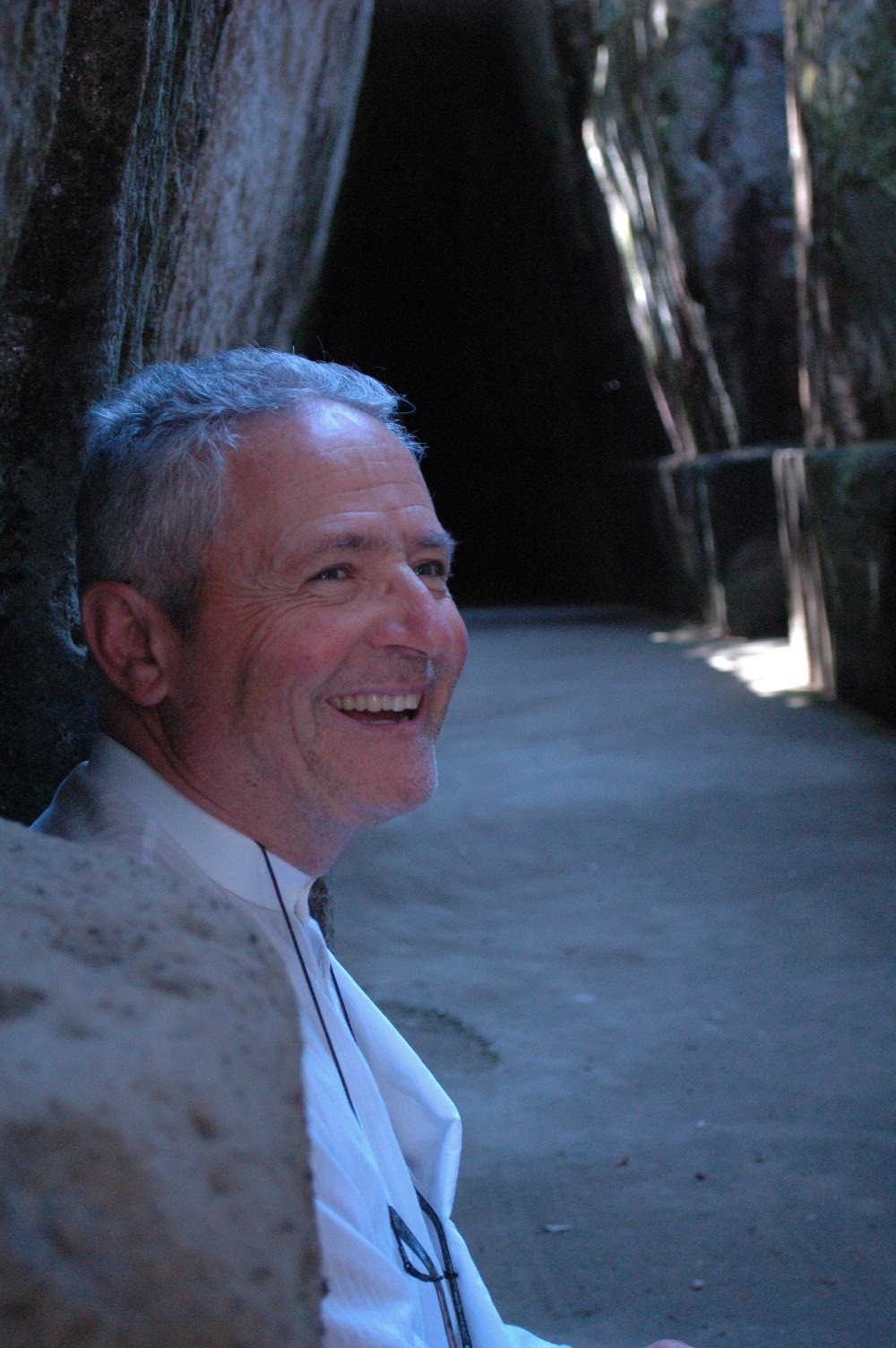
H.G. Matsyavatar Das

Showing posts with label CSB. Show all posts

Friday, 3 May 2013

Shri Nityananda: The Everlasting Beatitude


In order to understand Shri Nityananda Prabhu’s image in the Gaudiya Vaishnava tradition, we have to know the Avatara doctrine, which describes the way the Lord appears in this world in behalf of His spiritual energies. Shri Nityananda  Prabhu is a manifestation of compassion, of mercy and of divine love. He is the supreme Person, God himself who stepped into history and made His appearance in this world in the second half of the sixteenth century, according to the Western calendar. Like in the Shrimad Bhagavatam literature, which narrates Shri Krishna-Balarama’s adventures, in the Caitanya Caritamrita and the Caitanya Bhagavata, respectively written by Krishnadas Kaviraja Gosvami and Vrindavana das Thakur, they narrate Shri Krishna Caitanya Mahaprabhu’s and Shri Nityananda Prabhu’s divine adventures.
Krishna Caitanya Mahaprabhu is Krishna himself, who is manifested with a special rasa, that of Shrimati Radharani. Shrimati Radharani’s love for Krishna is experienced and manifested in full by Shri Caitanya Mahaprabhu who lives in Shrimati Radharani’s rasa and that ontologically  represents the divine union between Radha and Krishna. Shrimati Radharani is endlessly and for ever in love with Krishna, the same as Shri Caitanya Mahaprabhu’s love is everlasting and infinite.
Like Shri Krishna, whose brother and inseparable friend is Shri Balarama, Shri Caitanya has an inseparable friend too, whose name is Shri Nityananda. They are inseparable in the feelings of love that join them together. Shri Nityananda Prabhu would have shared Shri Caitanya Deva’s company all time long, however he had to fulfill his mission in behalf of His beloved associate: to travel from city to city in order to spread the holy name of the Lord. Therefore Nityananda, together with one of his best friends, Shrila Haridas Thakur, engaged himself completely in the diffusion of the sacred science, practising Harinama Kirtana and Harinama Sankirtana. In this way, by sharing this responsibility with other dear devotees, in this supreme mission that is the diffusion of love for God, Shri Nityananda Prabhu became one of the most dear Shri Krishna Caitanya Mahaprabhu’s spiritual associates.
Like Balarama, enterprising, strong, outgoing, generous, always compassionate towards the devotees, whose manifestation was considered as one of the original spiritual Master, the same Shri Nityananda Prabhu preached the sacred science and  spread his teachings to all the people of good will, in the practice of Bhakti. 

Thursday, 6 December 2012

The Help Everyone Needs


The path of spiritual evolution is marked by different phases, breakthroughs,  deviations and stagnations, falls, imprisonments and  progressive liberations.
Even the man who has testified the important improvements on the path of spiritual realization and is sincere in his intention to evolve, is still bound to make mistakes and therefore is subject to karmic conseguences due to the remaining unsolved conditionings. 
However it is at the time of crisis that a person needs our affection more than ever, needs our help through comprehension  and forgiveness in order to try once again and overcome the limits, that had been structured in the numerous past lives.
As I have been observing for decades, the persons meet a lot of difficulties along the path of evolution, and it is rare that one proceeds steadily and coherently, rather everyone makes steps backwards and forwards according to one's peculiar characteristics: the individuals most advanced in the inner growth are those who make more steps forwards than backwards.
Through their walking towards spiritual love and perfection all these souls in the prakriti world need encouragement, most of all when they are in the process of rolling back. A sincere help received at the most crucial moments of life is the best call in order to carry on along the right path.

Thursday, 13 January 2011

Family Matters (Part One) - By Matsya Avatara Dasa (Marco Ferrini)


I believe that family life, the grihastha ashrama, is a theme of universal interest. Some will get married and some will not, some will have children and some will not. But also those who don't get married and those who have already surpassed this phase of life will greatly benefit by knowing the basic dynamics, the rapport of weights and measures, the values of family life in the Vedic-Vaishnava civilization. In the past so much damage has been done by people―who had no positive experience in this area―who tried, disastrously, to handle the life of others. Therefore those directly involved in family life―as well as those who have to come in touch with those directly involved―should know about the fundamental principles and values on which family relations are based. To know such fundamentals of the grihastha asrama is an integral part of spiritual realization, not because it's in itself something spiritual, but because it's a social organization propaedeutical to spiritual realization. Even those who renounce family life for a more elevated aim will always be in touch with those in family life. Directly or indirectly everyone is interested in family life, either because one is married, or because one plans to form a family, or because one has brothers, sisters, sons, daughters, or parents in family life. In this way this ashrama is fundamental and is not completely avoidable even for those who desire to live as brahmacari―a very noble commitment and intention.
From Krishna's point of view there is no difference whatsoever between brahmacari ashrama, grihastha ashrama, vanaprastha ahsrama and sannyasa ashrama. These are four positions or stages of life in which one places oneself for self-realization. The goal of life is not to become sannyasi or brahmacari, or to become grihastha or vanaprastha. The goal of life is self-realization and this time we talk of the grihastha ashrama because in this phase many people complicate their problems and their relations. Many people have therefore proposed alternative arrangements to married life but they all have been appalling disasters. Family life is certainly the most complex stage in terms of interface with the world. One has to deal with economy and with a whole series of connections and relations―sometimes extremely difficult―such as children, parents, brothers and sisters.

Delivering One's Dependents

Question: In the Fifth Canto of Shrimad-Bhagavatam Rishabhadeva states: “One who cannot deliver his dependents from the path of repeated birth and death should never become a spiritual master, a father, a husband, a mother or a worshipable demigod.” [SB 5.5.18] Could you comment?

We can't force anyone to go to the spiritual world but we can honestly take the responsibility of doing whatever is possible to help a person to untie his or her karmic bonds. It happened that I had to advice people in debt. Their real problem is not the debt with the bank or with somebody else; their problem is their behavior and their mentality, structurally wrong. If someone in a moment of generosity would pay back their debts, they would continue to incur in debt anyway, because insolvency is ingrained in their character. They do things in the wrong way and produce debts. This is similar with karmic debts; it comes from the same source: errors inside, a deformed mind.
This statement by Rishabhadeva means that we should do our best to rectify people's mind. Diseases, for instance, are other types of debts but the dynamics are the same. There is no such thing as good and bad luck; what exists is the way of doing things, the mood, the quality of the mind and of the intellect. We have to analyze the vasanas, the latent desires. When the latent desires are negative, the negative eventually comes out. Someone may accumulate money and not make economic debts, but the same person may make debts in his relations; he might create enemies left and right, and those are extremely heavy debts. Other people are very capable in the field of relations but whatever they do and touch ends in disaster. These are also debts. Therefore the shastra teach that we should control the senses, for life becomes risky when even a single sense breaks free.
Have you seen the dependence of the smoker, who surreptitiously gets away to go and have a cigarette? Have you seen the character-deformation of an alcoholic, or of a cocaine-addict, or of a gambler? They live in great suffering and with great internal conflict. The gambler knows that he is destroying his life and the life of those around him. Well-equipped casinos had a room with a notary ready to write the will and where the loser could shoot himself, could commit suicide. Gamblers know that gambling is bad; they cry and bang their head into the wall; they know that by playing they ruin themselves and their families, but it overwhelms them. Similar dynamics are there for the women- or men-hunters, the assaulters of others' purity. Therefore we should educate people to control their senses from childhood. This is what Rishabhadeva is saying. And one must have self-control himself, otherwise how can he educate others? How someone who smokes can tell another to stop? So Rishabhadeva says that one who assumes the responsibility for others should be able to guarantee them liberation―guarantee it from his side―but they are not wood-heads, they are not automatons; they can choose. Everyone has to endeavor, but the leader should educate others to be free from the conditioning of the six degrading impulses: the urge to speak, the mind’s demands, the actions of anger and the urges of the tongue, belly and genitals. In this sense the husband, the father, the mother should be gurus, even if they don't know the sacred science in depth.

Pull quote: We can't force anyone to go to the spiritual world but we can honestly take the responsibility of doing whatever is possible to help a person to untie his or her karmic bonds.

Friday, 19 November 2010

Counseling based on a Bhaktivedanta approach - Interview given by Akrura Prabhu to Shriman Matsyavatara Prabhu (Part II)

Akrura Prabhu: Therefore all this requires the development of eminently personal relationships?

Matsyavatara Prabhu: Certainly. Every person must be considered as a single world. A charming, universal conscientious unique being, different from others, with whom we can establish a unique and special relationship. No one must be stuck in a scheme or labeled as a certain psychological type. By viewing an individual in a schematic vision we can significantly diminish the help that we can give him. I would like to stress that this help is not comparable to a psycho-therapeutic cure. It draws teachings and spiritual values that can produce harmony, equilibrium and long lasting wellbeing to every component of the personality and in every sphere of existence (psychological, social, professional, etc. )

The available instruments of Krishna-Bhakti are formidable and extraordinarily powerful, but we must learn how to use them at their best by understanding how to apply them to ourselves. To do this it is important that we are encouraged to go deeply inside ourselves, try to really understand our feelings, what is against and what is favorable to our evolutionary process, and how we can better express our spirituality and devotion to the Lord. As it is explained in the Ayurvedic science, each individual has a determined psychological-physical profile: pitta, kapha or vata, at the same time in transcendent psychology, on the spiritual level, each one of us has his own rasa or spiritual sentiment that connects him to God in a peculiar way. By rediscovering that rasa, we can participate in ananda, hladhini shakti and happiness which is intrinsic in our original Love nature. And by realizing this rasa every negative tendency and behavioral defects disappear naturally. Consequently, discouragement, suffering, sadness, fears and depression will dissolve. Therefore, helping people first of all means helping them to re-settle in their human nature by stimulating them to do what is more in accordance to their nature, from which they can draw authentic satisfaction and benefits.

Devotional service means encouraging a person to center himself in his own rasa. If we do not stimulate the devotee to engage himself in his guna and karma coordinates and in the vision to realize his peculiar relationship with the Divine, he will hardly be able to live his spiritual life in a joyous and evolutionary way.

Akrura Prabhu: Therefore we must engage people in accordance to their nature.

Matsyavatara Prabhu: Yes indeed. This could be a priority even in relation to the principle of practical utility because this is the only way that we can really offer a good spiritual cure.

Akrura Prabhu: I remember reading a letter from Shrila Prabhupada in reference to this where He underlined the importance of acting this way.

Matsyavatara Prabhu: Yes, it is fundamental to comprehend inclinations and spiritual aspirations of each individual by helping him first with recognizing them. We must interact with each person in a personalized way. We could not act the same with two individuals, not even with twins! Each person is characterized by his peculiar nature and we must enter the same wavelength. This also includes the development of a peculiar modality of relationship, a modality more in accordance with our interlocutor.

Akrura Prabhu: It is a great principle, an important lesson.

How can you comprehend people’s problems and help each individual with expressing and facing his uneasiness?

Matsyavatara Prabhu: By establishing a personal relationship, sharing experiences, doing things together, educating him on how to reflect and weigh up his life and make projects for his future. This would help people with connecting even more the dreamed reality with the one lived every day by increasing their desire to overcome their limitations and to evolve by developing a greater sense of responsibility. One of the main causes for suffering is the inability to realize ones most intimate aspirations, the discrepancy between who we are and who we would like to be, between how we live and how we would like to live.

Akrura Prabhu: When and how do you generally include the importance of undertaking ones responsibilities?

Matsyavatara Prabhu: I try to make the individual responsible right away. He who doesn’t have a sense of responsibility, cannot aspire to bring improvements in his life.

Thursday, 11 November 2010

Counseling based on a Bhaktivedanta approach - Interview given by Akrura Prabhu to Shriman Matsyavatara Prabhu (Part I)

Akrura Prabhu: I would like to hear of some fundamental principles that favor people’s spiritual healing.

Matsyavatara Prabhu: First of all we must distinguish between those who have already made a specific spiritual choice and those that have not done it yet and are not looking for a religious conversion, but they are interested in resolving their existential problems and finding answers and solutions to daily practical questions.

We can offer spiritual teachings to both of these categories of people, however using different approaches and modalities and in particular a different language adequate to their respective needs and interests. The common purpose of these helping relations is to favor conscience awareness of one’s deepest spiritual nature identity and favor a higher sense of living.

Akrura Prabhu: Please explain both typologies in relation to these helping relationships.

Matsyavatara Prabhu: I will begin by speaking of those that have already made a precise spiritual choice. When these individuals tell me that they have “spiritual” problems I try to convey to them that in reality there are no “spiritual problems”. Problems can arise on a physical, psychological or emotional level. Sometimes they can be on the economical, social, professional or in the religious life area, but not on the spiritual level. Instead, the solution of all these problems is indeed the acquiring of spiritual consciousness which is a vital state because it leads one to reach a superior point of view.

Crisis is constantly present in human life, however, it is the modality of our answers to crisis that makes the difference. Therefore, one of the first necessary steps is to help people to become conscious of their mental automatisms which lead to inadequate reactions to life events. A person must be helped with looking inside himself and become conscious of behavioral models used subconsciously and of the obstacles to his evolutionary path. Generally I begin this work by exploring repressed desires, trauma and fears.

Often we meet people that, in the name of spirituality lived in an immature way, have removed some aspects of their personality or dark episodes of their lives without making an effort to enlighten them with a superior conscience, thus solving the connected uneasiness and problems. Removing of such things is one of the principal causes of strong existence crisis and often they are favored by abstract pseudo-spiritualistic escapes. Uddhava Gita offers teachings in relation to this. It explains how spiritual life must provide in a way that cannot be put aside, the strict observance of sattvic principles that bring light, equilibrium and harmony in the psyche and personality in its complex. Such principles are important because they allow for a constructive satisfaction of requested and neglected needs, often removed much earlier.

Generally I ask people what they would like to do, how they would like to be, where they would like to live and with whom. These questions may appear simple and maybe trivial, however, the answers are crucial because we must be clear within ourselves and favor our spiritual journey by letting emerge those aspects of our personality on which we must intervene most urgently. For example, an uneasiness toward a job that we don’t like could arise. In this case it would be necessary to give teachings geared on how to overcome the attachment-repulsion dualism and on how to approach something that give us pain (dvesha).

Those who practice Krishna-Bhakti have many formidable instruments at their disposal to work on themselves such as Harinama japa, Meditation, Visualization, Devotional Service and Sat Sanga. The company of Bhakta, mainly those who are particularly evolved and experienced, is one of the principal “therapeutic” factors. However we must benefit from Sat-Sanga not in an abstract way, but through personal relationships lived with emphatic emotion in daily activities based on doing things together. This devotional service results in the best instrument of reciprocal knowledge, and allows for constructive, sound and extraordinary relationships which are beneficial for the evolutionary development of all.

Thursday, 25 February 2010

Shriman Matsyavatara Prabhu in Assisi

By Madhavipriya Dasi

Assisi, 30 January 2010

Yesterday evening, Matsyavatara Prabhu held a confererence on Bhagavad-Gita and Divina Commedia at Santa Maria della Scala in Siena. More than two hundred people were in the audience. Once again, the Bhakti message becomes a protagonist in places that represent the peak of the Italian and European culture, and it is expressed in that universal language that connects the Orient and the West. Tomorrow, the same event will take place at Palazzo Priori in Perugia.

Today, together with Shrila Gurudeva and some devotees we visit Assisi and the places where San Francesco expressed his Bhakti for God. We concentrate in front of the place where San Francesco left his body on October 3, 1226 and where he had his first mystical vision, the Church of Porziuncola. Here, Shrila Gurudeva begins to speak with words that vibrate of the highest holiness.

“God shows Himself only for His sweet will. His manifestation or revelation to man is not forced by external or logical-material causes. Even undergoing the hardest asceticism doesn’t compel God to give His Mercy. Only thinking of this would be offensive.

To hope to receive the divine Mercy, we should have one aspiration only: realizing our real nature which is the one of servant of the Lord and surrender ourselves to His will. When the soul accepts to let itself go to God, with joy, not passively but creatively, by engaging every quality and talent to His service, the Lord reveals Himself. When our only desire is to serve God and in Him all the creatures, without expecting anything in return, because we are already gratified by doing so, the Lord manifests Himself in our heart. Shri Krishna is conquered only by Love which by definition refuses any forcing.

Here, San Francesco received the Divine Mercy. Here, the Lord revealed Himself to him when Francesco didn’t have any worldly desire left because he had realized their inconsistence and he was searching for the sense of life. Detachment from power and richness and from everything that is corruptible brings us close to God.

When God manifests Himself in our heart, we can hear a special music, which is not produced by material instruments but by the soul.”

While Shrila Gurudeva speaks, in the Church there is the sound of the organ and of chants that glorify the Lord.

“San Francesco decides to leave his body in this place where the Lord had manifested Himself. He welcomes “sister death” in harmony with all of the creatures, the create and the Creator, with that sentiment of pure devotion that joins him to the great Vaishnava Saints and those of all the authentic spiritual traditions. Their message is a message of hope and complete faith in God. Let’s cultivate this rasa in our heart and let’s always keep it with us. He who turns to the Lord with faith and in a sentiment of surrender, receives from Him all of the sustainment and love. If you raise your eyes to the sky, you can hear His voice.”

Upon exiting the church, we immerse ourselves in the singing of Mahamantra Hare Krishna. The names of the Lord enlighten the night, warm-up the hearts and open every way to the Lord.

Friday, 5 February 2010

Dante’s journey and Bhagavad-Gita - Siena, January the 29th

By Madhavipriya Dasi

Friday, 29 January at Santa Maria della Scala in Siena, artistic pole of the city and privileged reference for the European culture, Marco Ferrini hosted an event on the subject: “Dante’s journey and Bhagavad-Gita. Psychological experience of Inferno, Purgatory and Paradise for the Contemporary Man.”

The dialogue between earth and sky, Ferrini explained, is one of the central themes in both Bhagavad-Gita and the Commedia. “These two great works dialogue among each other in an extraordinary way. They both describe the cowardice and the longing of the individual in relation to the highest ideality. The spiritual message that is transmitted overpasses the limits of the paradigm of space and time. Geographical distances and millenniums disappear when we see that the journey of the protagonists of both works, Dante and Arjuna, find the same stages. They both must face inquietudes and hard trials to overcome their own limits. Even if they live in extremely different cultural, social and political contexts, both Dante and Arjuna begin their journey from a dark forest, which is their anguishing confusing and lost state. They both find the way that leads them to see the light of the soul all the way to the realization of the Divine Immortal Love which is Bhakti, in the Hindu-Vedic tradition and “the Love which moves the sun and the other stars” in the Divine Comedy .
After a social-historical and political contextualization of both works Ferrini read parts of the Divine Comedy and Bhagavad-Gita and commented and revealed surprising coincidences. At some points, the teachings seem to overlap in their universality. Even today they offer a great reference to the Oriental and Western men who wish to undertake the journey toward their inner enlightenment and happiness. A journey to realization in this life, this world, here and now, in comparison with their true society.

Virgilio leads Dante through this evolutionary journey all the way to Beatrice who represents the soul of the poet and in Bhagavad-Gita he is lead by Krishna, the Divine Manifestation that offers to his devotee eyes capable to see reality instead of appearance, with the purpose of realizing the highest spiritual essence.

“Each of us can live here and now in a state of conscience typical of Inferno, Purgatory or Paradise. To exit the Inferno, Dante had to change his point of view, detach himself from egoistical identification, see people dear to him in Inferno, look directly at human defects, identify in those infernal people that he meets what upsets him or stops his evolution in ascending the beautiful hill.

As long as we blame others for our suffering we cannot exit Inferno. Only if we take responsibility for our errors and do our best to correct them we can return to gaze at the stars and hoist the sails of the sheep of our intelligence. The beasts that block the way, Dante and Arjuna’s, are the same ones: the variegaled skin of that wild beast, or cupidity (kama), the lion which represents rage (Krodha) and greed (lobha), portrayed by the wolf which after eating she is more hungry than before. In both works the protagonists are encouraged and educated to overcome obstacles and as such it is inspired who immerges himself in the reading of these great texts entering into their deepest spirit.”

Love, Ferrini concluded, is the peak of the teaching of Bhagavad-Gita and Divine Comedy. It is a not merely human Love, it doesn’t coincide with sentimentalism, it is not of exclusive nature, but lived with universal modality which is expressed toward every creature. A kind of Love that doesn’t need expectations or compensation but it is sufficient to itself. In its purity it finds strength and total gratification. This Love allows us to enter that meta-space of the heart where man meets with God and where we can find all of the beauty, richness, knowledge and immortality that each of us is pursuing.”

For the 200 or more people who participated and for all of those that would like to participate there will be an opportunity to continue to explore the charming dialog between the Divine Comedy and Bhagavad-Gita and other lectures on this subject will be scheduled. You may find additional information on the following website www.c-s-b.org.

Thursday, 21 January 2010

Christmas class

By Madhavipriya Dasi

We depart for Villa Vrindavana for the lecture given every year on Christmas day by Shriman Matsyavatara Prabhu.

On the path of Villa Vrindavana a huge holm-oak has fallen down and obstructs the road. We see its gigantic roots torn-off from the dirt. In this world, even what looks so impressive and seems almost unassailable, falls down. The search for another dimension, in which to live, is such a priority that it is the only thing really important to do.

We enter the Temple and we immerse ourselves in a sweet song dedicated to Shri Krishna-Gopala. The devotees are dancing and offering prayers. The Deities are dressed in pink and blue shine of a light that is not of this world. The lecture begins.

Today we celebrate the glories of a great devotee of the Lord, Jesus Christ, a pure son of God, a shakti-avesha avatara, as He was defined by Shrila Prabhupada. With Christ we celebrate the glories of all the pure devotees of all the authentic spiritual traditions of all languages and skin color. The common denominator of these great personalities is that they all brought a message from another world, another dimension, where there is not only peace and justice but also freedom and love. Their message is of freedom.” What does freedom mean? The Shrimad Bhagavatam explains that moksha consists of freedom from any identification with the dimension time-space sarvo upadhir vinir muktam. Our predisposition to freedom will be more or less in accordance with our way of life, sattvic or rajo-tamasic. In Bhagavad-Gita (II.25) it is explained that the spiritual soul is not contaminated, nor transformed, then what hamper our predisposition to reach heaven while we are alive? What detours us? What interrupts our march toward freedom? The conditioners of the psyche. More precisely, the ancient samskara that produce memories that generate a renewal of egotistical attachments. If the good discerning tattva viveka is not constant, where it is lacking, the good predisposition to reach heaven is interrupted and obstacle elements enter the conscience. We reach freedom only if we learn how to handle our emotions and our thoughts without depending on them any longer.

The free souls are free from resentment, rancor and other negative emotions that contaminate and paralyze the conscience, such as revenge and hate, which hamper the evolution with their presence. The capability to dominate the mind opens the door to freedom and to the best way to dominate and harmonize the mind is focalizing it on Krishna. If the psychic emotions do not attach themselves to a center, they are like planets without an orbit. This center, in religious terminology, is God, the Handsome Supreme Who has the capability to attract all the energies, and in psychological terminology the Inner-Self. The devotee puts any thought, emotion and desire at the service of the Lord. He offers to Him any action and it is in this manner that he disconnects from the dependence and influence of the psychic fields and from the consequences of his actions. This is why in Bhagavad-Gita (IX.34) He says to Arjuna:”If you meditate constantly on Me, if you act as My devotee and you offer to Me all your actions with spirit of sacrifice, if you respect Me and offer Me your prayers, and you bow in front of Me, you will obtain freedom and will come to Me.”

As Bhagavad-Gita explains in VII.14, you can overcome the influence of the gunas only if we give ourselves to God, by offering everything to Him, by founding our life on the modality of sacrifice. Sacrifice ourselves means become sacred. It is the modality of offering to God in the Bhakti spirit that allows for the consecration of the waters of the mind and makes our rapid evolution possible.

Special souls descend from the everlasting reality to give us the message of freedom, to inspire us with a divine life and immortal love. Without their teachings and their mercy we cannot relight our spiritual desire to make it Divine love. Only if we can understand their mercy, we can purify our desires, thoughts and emotions and divert them toward the research for God.”

Shriman Matsyavatara Prabhu reads and comments wonderful excerpts from Bhagavad-Gita that describe the characteristics of the freed dimension.

Moksha means freedom from death but also from birth, from suffering but also from the so called pleasure which in reality is the source of pain. In the Hindu-Vedic literature we often see the image of the wheel of samsara which produces death and rebirths. This wheel is composed of six rays: virtue and vice, pleasure and pain, attachment and repulsion.

When we act egotistically, whether in sattva guna or tamo guna, we start the wheel with the six rays where living as deva in the celestial planets or as asura in the dark planets, will always entail death and rebirth. It is why the pure devotees always speak to us of a world which is beyond the sky and the infernos, beyond the worldly goodness, beyond the cycle of deaths and rebirths.

The great stories of freedom that we find in the holy books are metaphors of that dimension that is the true purpose of those that descend from there to bring us news from that transcendent world. Transcendence is the dimension of immortal Love (Bhagavad-Gita XVIII.54).”

The attending devotees asked various questions. Freedom and transcendence are the center of our attention.

What does living in transcendence mean and is it possible to do it while we are still in this world? Yes, at the same rate as our developed heart purity! Even a small and short experience of the transcendent reality can change our life because it allows us to experience that dimension which is pervaded by sentiments, tastes, or rasa, so fascinating that nothing else, in comparison, has value as explained by Jiva Gosvami when he commented the second verse of Bhaktirasasmrita sindhu.”

There are more questions in reference to Buddhi-yoga, analogies between Bhagavad-Gita and the Gospel, the meaning of shloka XVIII.66 of Bhagavad-Gita. We understand ever more that the teachings and life models of the pure devotees are like lighthouses in the dark night of incarnation. We can hope to proceed without incidents, by freeing ourselves from conditioners and reaching that transcendent dimension of immortal Love only in accordance to the path lightened by their teachings and life examples.

Friday, 11 September 2009

La India del Auto-Conocimiento


Inauguracion Viernes 11 de Septiembre de 2009 20:30 hrs.
hasta el domingo 20 de Septiembre de 2009 Casa de Cultura de Nuevo Leon, Monterrey, Mexico.

ENTRADA LIBRE

Logos: Conarte - Casa de Cultura - Artes Visuales

NL Estado de Progreso