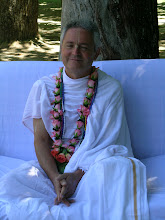
H.G. Matsyavatar Das

Showing posts with label ethical values. Show all posts

Monday, 21 July 2014

Spiritual Values to Win the Shadow.


Many people look for tangible and concrete things in life, but it is important to know that the so-called "abstract values" are even more substantial than those perceived through the senses – the true values which we should refer to in our life, such as compassion, freedom, happiness and Love.
The empiricists are prone to "measure and touch" happiness, to grasp all the things in the world. Such attitude is not an evil in itself, it becomes such when a man ignore his spiritual essence, sometimes even denying it completely. As far as, according to the positivist criterion, happiness is not tangible, in its absence a person falls into the dark malaise and depression.
Thus, lacking the feelings of compassion, charity, devotion to God and affection towards all His creatures, without solidarity with the creation, the experience of love cannot be realized. As a result, one's life turns to be boring and meaningless due to the lack of spiritual awareness.
Why do we make mistakes and suffer
so much?
The reason is that we do not cultivate spiritual values sufficiently. Slowly forgetting these real values ​​that substantiate the human life, one tries to compensate such values by attachments to the worldly projects and goods, as illusory as ephemeral. Thus, while creating one's false identity, a man lives in a sort of a perpetual alienation.
In such a state of alienation, oblivious of his spiritual nature and ultimate destination, an individual lose the sense of life. Joy and sorrow, health and disease, birth and death follow each other as impermanent manifestations of existance.
Therefore a spiritual being,
incarnated in the material world, despite an overwhelming aspiration for eternity, wisdom and happiness, experiences a considerable frustration, helplessness and fear because of an inability to access the bliss of its ontological nature, while struggling in the duality of the material world.
A wise man does not dream of becoming happy due to the impermanet things of this world. In all the traditions, albeit with different words, it was stated that "man cannot live on bread alone."
If we learn what to desire and how to value our life, we will become happy enjoying every moment of it, in spite of any psychophysical limit. By the grace of God, living in the prospect of immortality and love for God, a man can overcome loneliness and suffering so to experience fulfillment and spiritual satisfaction, always and everywhere.

Thursday, 24 April 2014

How to build good relationships


PART II
The loss of awareness of our original essence results in a deep dissatisfaction and inner deterioration. People do not behave in a bad manner because they just wish so, rather because they are dissatisfied within.
How can we help people to feel satisfied?
Sensitiveness is not enough to empathize with the others so knowledge and discipline are required.
What about those people who do not even show sensitiveness?
We may learn to acquire, develop, find sensitiveness, which in Latin is called pietas. Sensitiveness can be found in atman, our spiritual matrix. We cannot trust the mind because when external circumstances change, our mental frame modifies consequently. For this reason we have to help people to start an inner search, to rediscover their real self. In this way, by developing such awareness, we can face the situations that otherwise could have become our limits, according to the changeable circumstances of life.
Our relations should not depend on external circumstances, we ought to learn to overcome them.
A great daily effort within needs to be done if we want to achieve this target. By conquering the inner enemies one after another, we lead ourselves to steadiness, tolerance, peacefulness. By practicing such attitude we learn not to react automatically to events, provocations, offences, abuses.
A person needs to modify one’s point of view. One may wear a heavy shield to protect oneself, but it will not be strong enough because it is only by switching and elevating our point of view that we reach a steady and broad inner confidence.
We miss a great deal of life which cannot be reproduced in the present span of time, if we carry on to identify as real what real is not. By modifying our point of view, our efforts, our dedication towards such an elevated mission will unveil to us the meaning of living.
It is not easy to succeed because we were born with a superficial mental attitude, with prejudices and tendencies acquired through behaviors we have brought back from previous lives. Performance of actions are pressing from our subconscious and lead us to repeat the same old mistakes. Therefore we need great care and attention to avoid circumstances that may put us at risk.
A person does not learn by punishment, rather by improving through education on an ethical and spiritual level, so that one may distinguish and filter between experience and its interpretation and between experience and reaction to events.

Monday, 28 October 2013

The Real Success.


The  experiences of accomplishment that one can reach in her or his lifespan, sometimes can be conflicting with the self-image, possibly being the one of an unconfident person, a weak individual, too reliant on someone else’s opinions. If this self-image will not change, the outer accomplishment will be followed by inner troubles and unsteadiness. This is because the new higher equilibrium is such only when it is achieved with harmony and stability. To avoid this kind of situation one should conceive and support a self-image corresponding to what one would like to be and should be. If one will shape her or his personality in depth, then this person will be psychologically ready when an accomplishment or a better position will be achieved. Conversely, some individuals are afraid of their own success because they have not built yet an objective and positive self-image.
Powerful desires move things and alter reality. A person becomes what she or he craves to be. Egoistical ambitions do not lead to real accomplishment: the apparent success sooner or later will turn into calamity.
The immature management of resources and of desire's energy produces derangement and deep emotional troubles. Any waste and any improper use of the above is the cause of personal failure.
Anything we have: objects, affections, talents, must be employed to reconnect ourselves to the deep divine matrix, the raison d'ĂȘtre and foundation of our existence. If we do not do this, as explained by Shrila Rupa Gosvami, one of the greatest Vedic Tradition Master, anything gets contaminated and turns into poison. 
The perfection of existence (yukta vairagya) can be archived if we are closely connected to the Istha Devata and place all our resources to its service. Ambarisha Maharaja was the sovereign of the world, in spite of this he was not ruling it for his own egoistic enjoyment, but as a tool to serve God.  In order to run suitably that function maturity and awareness were needed, because who has so much energy can do great good things, but, if one is not cautious and do not have uncontaminated motivation in the way this energy is used, can cause great damages and bring harm to himself and everybody nearby. 
The most valuable resources, never to be neglected and never to be abused, are our fellow human beings, with their desires for advancement, their wishes for good, their projects, with their search for self-realization. We should not dare to waste even the smallest bit of their energy, we have to support instead their convergence, channeling, and sublimation toward elevated motivations of real good and real success. Sublimation will be possible if we encourage for taking a solid commitment for spiritual activities, with an active and energetic service offered with awareness and dedication to our spiritual Master and the Istha Devata. According to one of the most important and recurrent Shrila Prabhupada’s statements: "Bhakti Yoga is not just an idle meditation". Nor meditation means escaping from the world.
 Authentic meditation inspires and motivates actions in the world, and it is able to solve real problems, to disentangle knots that grew in the mind. Authentic meditation does not evade or remove practical problems: it resolves them. It is based on the consciousness of spiritual matrix of all things, and the understanding of the subtlest psychological phenomena: how minds get entangled or stuck, and how it is possible to jump-start them, reactivate them, and purify them.

Monday, 14 February 2011

About religious freedom By Matsyavatara Dasa (Marco Ferrini)


On December 10, 1948 the General Assembly of the United Nations adopted the Universal Declaration of Human Rights.

Article 18

-Everyone has the right to freedom of thought, consciousness and religion; this right includes freedom to change one's religion or belief, and freedom, either alone or in community with others and in public or private, to manifest one's religion or belief in teaching, practice, worship and observance.-

Article 19

-Everyone has the right to freedom of opinion and expression; this right includes freedom to hold opinions without interference and to seek, receive and impart information and ideas through any media and regardless of frontiers.-

In the last days we were ashamed to hear about the disrespectful behaviour resulted in barbarous acts against Christians, mostly in Countries of Muslim tradition, that caused the death of many people. By witnessing so many frequent episodes of violence, with regards to religious intolerance, more than ever today we feel the moral need to remark a fundamental concept for the human welfare society, to favour its ethical and spiritual development: the importance to respect one’s freedom to seek a religious belief as a civil way of living. Everyone has the right – women and men at the same level – to freedom of thought and expression of one’s own belief or religion. We make a strong and clear claim first of all to our conscience and to the sensitive people who spend time to listen, in order to reject any form of violence and whether possible to promote, to defend and value the respect for practising any form of religion, not only by granting to each individual the possibility to choose in one’s own private life which religion to follow and how. Furthermore to grant the faculty to become a follower of that particular beleif, self-guarding the right to become a witness of that faith, to convey and spread the message in the society we live in, with full respect for the others and for the basic values of living together in a civil society.
Episodes of violence claimed in the name of religion, with the aim to repress a faith different from the one accepted by the majority of the population, appear to us as heavy as those offences made towards us, against our own religious values that attain to our person, because such acts of violence are by far contrary to the essential freedom of every human being.
By repressing the rispectful expression of one’s belief, we deny the principle of religious freedom in itself, which is a fundamental part of a wider concept of individual freedom. As a matter of fact if we lack the freedom to practise spiritual values, what other kind of freedom could we ever talk about?
Freedom on the political and social level without the respect for a religious freedom, that attains to the more intimate and deeper instances of each human being, is considered neither real freedom nor justice. As History may very well teach us, where there is no justice there can never be peace and freedom.
Besides the kind of belief it may concern, each religious fundamentalism is an attack to freedom and to spiritual realization, the same as every exasperated laicizing of spiritual values is an attack to the expression of freedom, of one’s own way of being, feeling and projecting life in accordance to an evolutive and creative purpose.
For this reason, if we really want a better human world, it is essential, today more than ever, to become witnesses and leaders of an authentic expression of religion on the basis of a rightful freedom.

Monday, 31 January 2011

Family Matters (Part Four) - By Matsya Avatara Dasa (Marco Ferrini)


Spiritual Lovers

Question: Wife and husband should be seen more like spiritual friends or more like "spiritual lovers"? What is the difference between the two?
If the spiritual is authentic both definitions are synonymous. But only if it's authentically spiritual, because today it is a fashion to say spiritual: "Oh, today I got to know a very spiritual person!", but often people don't know anything about the dimension of the spirit. I remember, years ago, I had so much discussion on this with one person. I had to rebuke and correct him so many times. Slowly, slowly, he stopped. He had friends―some poets―that he considered spiritual but who were actually conditioned by everything: by tobacco, by alcohol, by scurrilous language; they were very conditioned. What a distorted idea of spiritual! I have explained and re-explained to him the definition of spiritual―five, seven, ten times―and it seems that lately he has grasped it. But the idea of spiritual is generally very vague, therefore it’s better to further clarify.
Let's analyze the category that indirectly emerges from your question: if the two, instead of being spiritual lovers, are carnal lovers. Then they are known as grihamedhi, which is different from grihastha. The distinction is that for the grihastha the fundamental goal is spiritual realization, while for the grihamedhi the aim is to get a beautiful wife or a handsome husband and enjoy each other. (Of course we know that it's only an attempt and than there is the other side of the coin.) These are the two categories. We have to make this essential distinction: does the person want to get married to increase his or her own potentialities of enjoyment, or does the person―in this case a sincere spiritualist―choose another sincere spiritualist in the form of the other gender to have a companion for the journey of spiritual realization?
Therefore we have two categories: those who pair for enjoying life better and those who unite for reciprocal help in self-realization. We exclusively deal with the second category; the first category is dealt with by sexologists, psychologists and other researchers. We are concerned only with those who try to have a family as a suitable, propaedeutical instrument for spiritual realization. The single man and the single woman may think, "By myself I can't make it." They may think that they are not yet ready to live as brahmacari or brahmacarini. Therefore, they look for a person with whom to walk a section of the path together, understanding from the beginning that the aim is to help each other to obtain liberation, to obtain love of God.
In this category―the grihastha―there could be some short-circuits at times, because the body is there, the senses are there, and the karma is there. Therefore by being close sometimes they find themselves too close and at times there might be exchanges of affection surpassing the level allowed in the shastra. I would say that this is not a tragedy. Some people have made a tragedy of it but then they themselves created tragedies many times greater than this. Probably I won't be acclaimed for saying what I am saying but, in all conscience, I am taking full responsibility and I have solid arguments to support my theses.

Going Beyond the Conditioning of Modern Culture

The information of the media―which the mass misinterpret as progress and emancipation―doesn't stimulate at all a 'positive' process of liberation and emancipation of the human being, but an indiscriminate consumption, which only profits the great financial and industrial groups. The disposition of modern man is to be lenient, to be accommodating with the weak side of his character, to let one's own bio-psychic impulses and the external influences dominate his personality. Even if superficially he appears original, spontaneous and self-assured, in reality he is an off-centered and fragile individual, because of being hetero-directed.
Control doesn't mean repression or suppression. Repression involves an irrational fear (taboo) that impedes the elaboration of psychic energies, which are mostly unconscious. Rather, reasonable control consists in governing the energetic manifestation, with the objective of utilizing those same energies for a constructive goal. Among the innumerable examples I could make I limit myself to the case under exam: the transformation of the sexual push into a satisfactory rapport of love, process that for years I have defined from Eros to Love.
In other words, through using a well-trained willpower, it's possible to control the bio-psychic energy through reason (Logos). This control is the opposite of repressing or suppressing one's impulses, as it can produce the transformation of the egoistic-destructive pushes in ecologic energy, beneficial to the individual, the collectivity and the environment. This process is defined transformation and sublimation.
The same principle applies to inhibition. The modern psychological literature―especially the one of Freudian school―has incorrectly attributed a negative connotation to the vital psychic function of inhibition. Evidence of the erroneousness of such idea is provided by scientific research in physiology, which has amply demonstrated that inhibition is a normal neurological function to better govern the organism. On the psychic plane also, to inhibit doesn't necessarily mean to suppress, but to apply a temporary brake to a reaction of the conditioned consciousness, in order to reflect on one’s behavior. To reflect means to activate the intellect, the buddhi, and to deliberate with emotional detachment on the present event without being overwhelmed by one’s urges. Inhibition is pathologic when used stubbornly, non-critically, but it is therapeutic when propaedeutic to sublimation: "One who is able to withdraw his senses from sense objects, as the tortoise draws his limbs within the shell, is to be understood as truly situated in knowledge" (Bg. II-58).
A person who lives the traditional values (sacrifice, work, saving, honesty, family, religion, etc.) doesn’t maximize commercial profit. To obtain maximum profit financial companies need to transform man in avid consumer, because to realize profit they need people to buy their products. Maximum profit for capital invested is given by a person who works to the maximum of his psychophysical capacity and consumes to the maximum of his financial capacity. The worker who is content leading his social or family relationships based on religious values and behavior is a bad consumer. He yields little, because to realize oneself in that way costs little or nothing and consequently doesn't push the individual to work to the maximum of his capacities. Similarly, the chaste girl who doesn't go out at night to have fun, the faithful wife who stays at home, the monk and the priest produce very little commercial profit. There arises therefore the need to create the consumerist, who seeks pleasure and entertainment, who seeks an individualistic, materialistic actualization and who frees himself from all the factors that could have inhibited such evolution, spending in goods and services whose sale produces profit. Modern culture achieved this by demolishing those ethical and social values―or motivational vectors―that checked the establishment of consumerism. Modern culture promoted liberation from duties, sexual liberation, blameworthiness of prohibitions, devaluation of the family and of family roles, emptying of religion, relativization of ethics and of authority. It created innumerable new personal fancied wants―essentially responding to the need of the industry to sell and gain: divorce, fashion, designer clothes and accessories, hankering for status symbols of every type, from classy cars to vacations in particular places.

Monday, 24 January 2011

Family Matters (Part Three) - By Matsya Avatara Dasa (Marco Ferrini)


Right and Wrong Decisions

We should try to be honest and serious, first of all with ourselves. We should have a balanced vision and not accept the people’s vow of lifelong celibacy at a young age, without having shown tangible signs of maturity and dominion over the senses. This maturity should be on different planes: cognitive, emotional and behavioral. A choice that is the best in absolute terms, can produce serious damages if made at the wrong time, due to the person's lack of preparation. If not properly helped, the person who incurs in such difficulties generally develops a sense of self-failure and a heavy sense of guilt, which eventually cause inhibition, depression, emotional blocks and a stop to spiritual progress. This sense of guilt can be defined as pathological, whereas a healthy and beneficial sense of guilt arises when the person is aware of his mistakes and deeply repents them, finding in himself, guru and Krishna, the energies to rise above them.
Regarding such sensitive issues, specifically connected to life in the grihastha ashrama, over many years I have noticed a vast symptomatology and many damages produced by hasty decisions and a rigid mentality. Many marriages have failed because the person experiencing difficulty in restraining the senses―when confronted with an overly rigid partner―has looked for satisfaction outside the marriage, starting love affairs and betraying the spouse, thus producing a hellish condition for all the people involved.
I recall a whole list of rigid people who first ruined their family members and then ruined themselves. Real affection means to come forward to the needs of others, and I believe that every real need in the family has to be taken into serious consideration. If a person thinks that he or she can't or shouldn’t concede anything, absolutely nothing, such person should not get married. And if he does get married, throughout his whole matrimonial life he will be bitterly reminded that he should not have married. Couple means two people, two people who promise to help each other for the rest of their lives. If one is in need and the other doesn't help, I don't know how this refusal could be beneficial for his spiritual advancement, and how it could be done in the name of devotion for Krishna. Of course there can be embarrassment, little enthusiasm and whatever else, but something has to be done to help.
I have seen so many cases of conflict and I have come to the deep conviction that there must be a mediation, there must be reciprocal affection, reciprocal care. When the desire for intercourse assumes a dangerous psychological proportion―producing a "fixed idea," a true neurosis―we should act as with any other disease, looking for a remedy and a cure. When I acted as a direct witness and I advised people in this way, they often solved their problem brilliantly, gradually finding balance, detachment and serenity, discovering a type of affection that was not based on sexual intercourse. Real affection, spiritual affection, has no need for sexual intercourse or physical contact. Such affection is the achievement of the target of bhakti, and is obtained after a long practice; it is not a starting point. At the beginning the couple might endeavor to overcome the problem, but to rise above it, the effort must be equipped with enough capacity and experience, and above all enough cultural and spiritual maturity in Krishna consciousness.

Cultural Conditioning

I spoke about religious duties, but now I wish to mention the cultural environment where each of us―consciously or unconsciously―lives. Over the last century, Western culture has been increasingly fascinated by rationalism and materialism, progressively polluting itself with a pseudo-scientific literature that has considerably contributed to the development of a dangerously permissive sexual behavior. Such literature has induced people to think of eroticism and sexual acts as something physiologically necessary, comparing sex desire to the need for food and air. Not only they have presented the satisfaction of such an urge as inevitable; they have even declared that whoever neglects it will develop psychological disorders. It is difficult to calculate the extent and harm that such mentality has caused and is causing. It is truly a social and psychological plague, both on the collective and on the individual level.

Spiritual Affection

On the plane of spiritual realization, of spiritual affection and friendship, sexual intercourse becomes totally needless, extraneous and artificial. But, as we know, people acquire perfection after long efforts. According to the shastra, a married couple that can transcend illicit sex is on the direct, true path towards perfection. Until there are distractions, spiritual realization is overcast and shadowed.
Besides, the authoritative sastric statements in this regard, the results of scientific research made by some American universities (Wisconsin, 1968) demonstrate that numerous couples can live well without sexual intercourse, provided they cultivate their interest for elevated ethical values.
First of all―as I said at the beginning of my answer―people should try hard to abstain from extra-conjugal sex, because this generates hellish conditions in the society, in the family, in the couple and in the relationship between parents and children. Such illicit connections, metaphorically speaking, create hell; they create great embarrassment and pain; they condemn children to experience distress and harmful life-models, and condemn the spouse to anguish and deep suffering. Illicit sex in family life is like giving methadone to a heroin-addict. Methadone is better than heroin (extra-conjugal sex), but better than methadone is to rise above the problem. Methadone also creates addiction, but not as strong and devastating as the addiction created by heroin. Illicit sex in family life creates dependence, addiction and identification with the body, besides being a great waste of energy―but there is no comparison with illicit sex out of the wedlock.
When my students intend to get married I ask them to get to know each other very well, and should thoroughly inquire about the other's choices and priorities in life. They should become deeply aware of the responsibility, the obligation, and the onerousness they assume in getting married. Then, I become the witness, and I commit myself to help both of them to overcome all the difficulties and to face their responsibilities, which include economical, social, and emotional aspects. These are all comprised in the sphere of family responsibility and, consequently, of spiritual realization.
As I told you many times, ultimately to solve this type of problems the real solution is to seriously adopt a Krishna conscious mentality... But now I believe I should stop here with the answer. Obviously, given the magnitude and complexity of the theme, this answer will not satisfactorily exhaust the various topics touched, but it will merely serve as an orientation tool for deeper study and meditation.